4 Aug 2026
Deposit-Free Credits Influencing Shifts in Reel Selection Patterns Across Modern Casino Platforms

Deposit-free credits function as entry points that allow players to sample digital reel titles without initial financial commitment, and this mechanism has produced measurable changes in selection patterns according to industry tracking data. Platforms operating in regulated markets report that users who receive these credits often gravitate toward games featuring higher volatility or niche themes that they might otherwise bypass when using personal funds. Data from the New Jersey Division of Gaming Enforcement shows increased engagement with experimental mechanics during promotional periods in early 2026, while similar patterns appear in records from the Ontario Lottery and Gaming Corporation.
Mechanics Behind Credit-Driven Exploration
Players receive fixed amounts of playable credits upon registration or through targeted campaigns, and these amounts typically carry wagering requirements that steer choices toward titles with specific return-to-player rates or bonus round frequencies. When credits apply exclusively to certain providers or categories, selection shifts occur because users test previously unfamiliar mechanics such as cascading reels or multiplier ladders before committing real balances. Observers note that August 2026 brought expanded credit programs on multiple U.S. platforms, coinciding with releases that emphasized interactive features over traditional paylines.
Research indicates these incentives reduce perceived risk, which encourages sampling across broader libraries rather than repeated plays on familiar titles. Figures from platform analytics reveal that sessions initiated with deposit-free credits last longer on average when users encounter progressive jackpot elements or cluster-pay systems for the first time. Those who've studied engagement logs find that once players experience a new mechanic through credits, repeat selections of that style increase even after the promotional balance depletes.
Regional Variations in Preference Adjustments
Markets in different jurisdictions display distinct responses tied to local regulations and available game libraries. In North American regulated environments, credits frequently direct attention toward branded content or licensed properties that carry higher production values. European operators, by contrast, document stronger movement toward games incorporating skill-based bonus rounds when credits remove the entry barrier. The European Gaming and Betting Association has compiled cross-border reports showing that credit users in multiple territories diversify their selections more rapidly than cash-only participants.
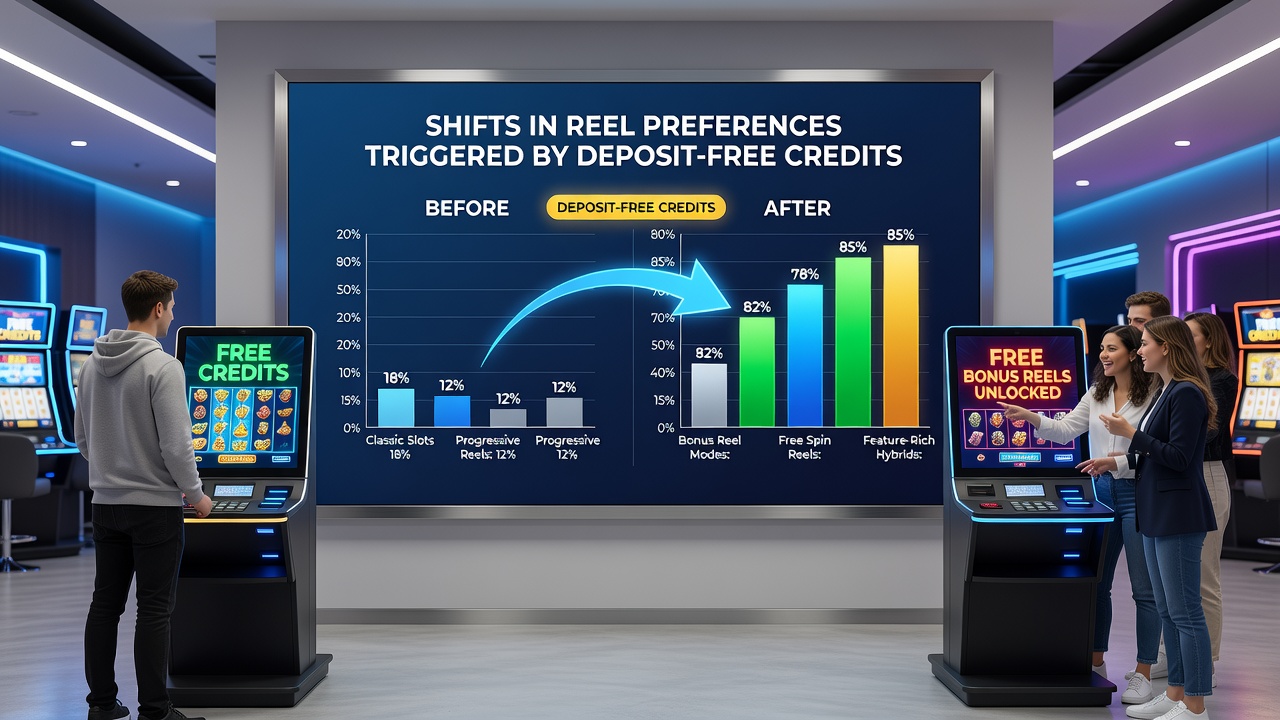
Platform operators adjust their promotional structures accordingly, often pairing credits with temporary access to premium features that highlight specific reel innovations. This approach creates feedback loops where data from credit-driven sessions informs future game development priorities. Studies conducted by academic groups focused on digital entertainment consumption confirm that preference shifts persist beyond the initial credit period, particularly when users discover mechanics that align with their play styles through low-stakes experimentation.
Data Patterns and Platform Responses
Analytics teams track metrics such as title switch rates and session duration per category, revealing that credit recipients explore an average of three additional game types compared with non-recipients during equivalent time frames. Providers respond by developing titles optimized for credit play, incorporating features that deliver quick feedback or visible progress toward bonus triggers. As August 2026 progressed, several platforms introduced hybrid credit systems that combined registration rewards with milestone-based top-ups, further accelerating diversification across reel libraries.
Regulatory bodies continue to monitor these dynamics to ensure promotional mechanics align with responsible gaming standards. Reports emphasize transparency requirements around credit expiration and conversion rules, which influence how long players engage with new selections before transitioning to standard play modes.
Conclusion
Deposit-free credits operate as catalysts that expand the range of reel titles players encounter, and aggregated platform data demonstrates sustained adjustments in selection habits across multiple regulated markets. These patterns reflect broader ecosystem adaptations where promotional tools shape discovery processes without altering underlying game mathematics or regulatory frameworks. Continued observation through 2026 will clarify whether these shifts stabilize into permanent preference realignments or remain tied to specific promotional cycles.